
Major Arcana vs Minor Arcana — How to Know Which One Is Speaking


One of the first things every Tarot practitioner learns is that a traditional Tarot deck has 78 cards. But the real understanding begins when you realise that these 78 cards don't all speak in the same way. The deck is divided into two main sections: the Major Arcana and the Minor Arcana.
Both are important. Both carry meaning. Both can give accurate guidance. But they represent different layers of life.
The Major Arcana speaks about the bigger story. It explores deeper life themes, turning points, inner lessons, spiritual growth, recurring patterns, and significant shifts. The Minor Arcana speaks about everyday life. It shows emotions, thoughts, communication, money, work, routine, choices, effort, conflict, and practical movement.
A good Tarot reader must learn to recognise which layer is speaking more strongly in a reading.
Is this situation part of a larger life lesson?
Or is it a temporary matter that can change through action, communication, maturity, or timing?
That distinction changes the entire reading.
What the Major Arcana Really Represents
The Major Arcana has 22 cards, beginning with The Fool and ending with The World. These cards represent major human experiences. They show the stages of growth, awakening, challenge, release, transformation, truth, healing, and completion. When a Major Arcana card appears, the reading usually asks for deeper attention.
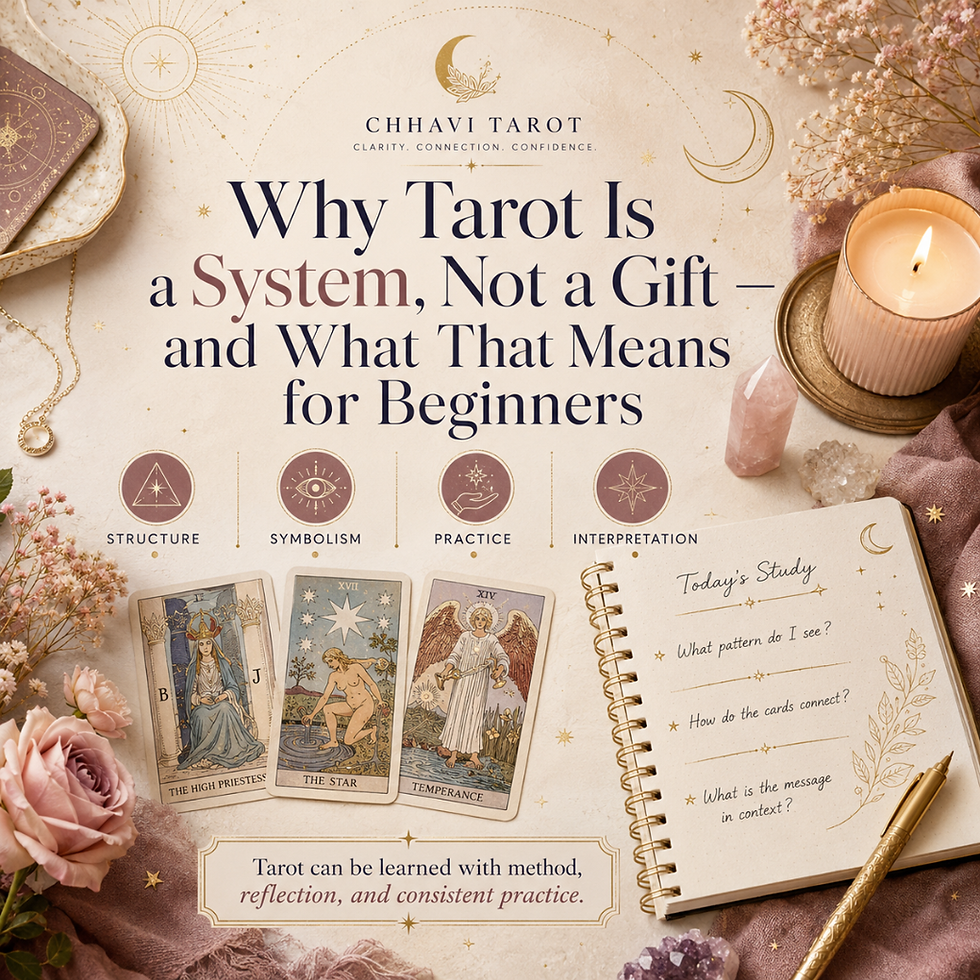
The Fool may show the beginning of a new journey. The Magician may show personal power, skill, and action. The High Priestess may show intuition, silence, or hidden knowledge. The Lovers may show love, but it may also show choice, values, and alignment. Death may show an ending, but it may also show transformation and release. The Tower may show disruption, but it may also show the necessary collapse of something false. The Star may show healing and hope. The World may show completion, success, or the closing of a major chapter.
These cards do not always mean something dramatic will happen outside. Sometimes they show what is happening inside the person.
For example, the Hermit in a relationship reading may not mean the relationship is ending. It may show that one person is withdrawing to reflect, understand their feelings, or create emotional distance. In a career reading, the same Hermit may suggest research, independent work, study, mentorship, or the need to reassess professional direction. In a personal growth reading, it may show a deep inner phase where the person needs silence, wisdom, and self-reflection.
The card is the same, but the context changes the message. This is why Major Arcana cards should never be reduced to one-word meanings. They are not simple labels.
They are larger forces.
When a Major Arcana card appears, the reader should ask:
What is the deeper theme here?
What lesson is being repeated?
What is the person being asked to understand?
What cannot be solved only through quick action?
The Major Arcana does not merely tell you what is happening. It tells you why it matters.
What the Minor Arcana Really Represents
The Minor Arcana has 56 cards. These cards describe everyday experiences and practical movement.
They show the situations people deal with regularly: relationship confusion, emotional attachment, work pressure, money matters, communication gaps, family expectations, decision-making, anxiety, ambition, routine, discipline, and personal effort.
The Minor Arcana is divided into four suits: Wands, Cups, Swords, and Pentacles.
Wands represent action, passion, desire, ambition, courage, movement, conflict, and creative drive. When Wands appear, something is active. There may be attraction, motivation, pursuit, competition, pressure, or the need to take initiative.
Cups represent emotions, relationships, intuition, healing, memory, care, and emotional fulfilment. When Cups appear, the emotional layer is important. The reading may be about love, affection, sadness, longing, disappointment, emotional openness, or emotional withdrawal.
Swords represent thought, communication, truth, conflict, decision-making, fear, clarity, and mental pressure. When Swords appear, the mind is central. There may be overthinking, difficult conversations, silence, honesty, anxiety, or a need to face facts.
Pentacles represent money, work, health, stability, home, routine, commitment, and long-term results. When Pentacles appear, the reading is grounded in practical reality. It may be about financial security, effort, responsibility, body, family, career, or something that needs time to grow.
The Minor Arcana is extremely important because it often shows what can be changed.
If a reading has mostly Minor Arcana cards, it may suggest that the situation is still fluid. The person’s action, maturity, communication, timing, effort, or practical choices can influence the outcome.
This is very useful in readings because people often come to Tarot asking, “What will happen?” But the Minor Arcana often says, “This is what is happening now, and this is where you can act.”
Learn Tarot step by step through the complete Tarot Coaching Course: Tarot Course — The Complete Tarot Reader
Start your self-study journey with the Tarot Handbook: Learn to Read Tarot with Confidence and Accuracy
Major Arcana Shows the Theme, Minor Arcana Shows the Details
One simple way to understand the difference is this:
The Major Arcana shows the theme. The Minor Arcana shows the details.
For example, suppose someone asks about a career change and The Fool appears with the Ace of Pentacles and the Two of Wands.
The Fool shows the larger theme: a new journey, a leap of faith, a willingness to enter unfamiliar territory. The
Ace of Pentacles shows a practical opportunity, perhaps a new job, business idea, income source, or material beginning. The Two of Wands shows planning, future direction, and deciding how to move forward.
Together, the reading does not simply say, “You will start something new.” It says: “You are at the beginning of a new professional phase. There is real practical potential here, but you need to plan carefully before taking the leap.”
The Major Arcana gives the deeper life movement. The Minor Arcana explains how it is showing up practically.
Now take another example. Suppose someone asks about a relationship and The Lovers appears with the Two of Cups and the Seven of Swords.
The Lovers shows attraction, connection, choice, and value alignment. The Two of Cups shows mutual emotional exchange or genuine bonding. But the Seven of Swords introduces secrecy, avoidance, strategy, or something not being fully revealed.
The reading becomes more nuanced. It may say: “There is real emotional connection here, but there is also something being avoided or not openly communicated. This connection may have potential, but honesty is essential before it can move forward safely.”
Without the Minor Arcana, the reader may over-romanticise The Lovers. Without the Major Arcana, the reader may miss the importance of the choice being presented.
Both sections are needed.
When Major Arcana Dominates a Spread
If a spread contains many Major Arcana cards, the reading becomes heavier and more significant.
This does not mean something bad will happen. It means the situation carries weight. The person may be dealing with a major turning point, a life lesson, a spiritual pattern, or an emotional truth that cannot be ignored.
For example, a spread containing The Hanged Man, Death, and Judgement is not a light reading. It may show a phase of pause, release, review, awakening, and decision. The advice may not be to rush into action. It may be to stop resisting the transformation and understand what this phase is trying to teach.
In relationship readings, multiple Major Arcana cards may show that the connection is not casual. It may be deeply transformative, karmic, difficult, healing, or connected to a larger emotional pattern. But this still does not mean the relationship will automatically last. Major does not always mean permanent. It means important.
In career readings, Major Arcana dominance may show that the issue is not just about salary, promotion, or workplace politics. It may be about purpose, identity, direction, calling, values, or a major shift in the person’s professional life.
When Major Arcana dominates, the reader should slow down. The message is not only about what to do next. It is about what needs to be understood.
When Minor Arcana Dominates a Spread
If a spread contains mostly Minor Arcana cards, the situation is usually more practical and changeable.
This does not make the reading less important. In fact, Minor Arcana cards are often the most useful for everyday guidance because they show what is actually happening and what can be adjusted.
For example, a relationship reading with the Four of Cups, Eight of Wands, and Six of Pentacles may show emotional withdrawal, upcoming communication, and an imbalance in giving and receiving. This reading may not indicate a major life-changing connection, but it gives very practical guidance: someone is emotionally closed, communication may come in quickly, but the exchange still needs to become more balanced.
A career reading with the Eight of Pentacles, Three of Pentacles, and Seven of Pentacles may show hard work, teamwork, skill-building, and the need to assess long-term results. This is not a dramatic reading, but it is very useful. It says: “Keep building, keep improving, work with the right people, but also review whether your effort is producing the outcome you want.”
Minor Arcana cards often show the next step. They help the person act with more awareness.
A Common Beginner Mistake
One common mistake beginners make is assuming Major Arcana cards are always more “powerful” and Minor Arcana cards are less important. This is not the right way to read Tarot.
A Major Arcana card may show the deeper lesson, but a Minor Arcana card may show the actual behaviour, decision, or action that changes the situation.
For example, The Star may show hope and healing, but if it appears with the Eight of Pentacles, the message is not simply “have faith.” It becomes “healing is possible, but it requires steady effort, discipline, and daily practice.”
Similarly, The Tower may show sudden truth or disruption, but if it appears with the Four of Swords, the advice may be to pause, rest, and avoid reacting impulsively after the disruption.
The Minor Arcana gives the reader practical guidance on handling the Major Arcana energy.
How to Read Them Together
The best readings happen when you read Major and Minor Arcana together.
Ask first: What is the bigger theme?
Then ask: How is this theme showing up in daily life?
If The Devil appears with the Four of Pentacles, the reading may show attachment, control, fear of loss, possessiveness, or staying stuck because security feels safer than freedom.
If Temperance appears with the Two of Cups, the reading may show healing, emotional balance, reconciliation, or a relationship that needs patience and mutual adjustment.
If Justice appears with the Ace of Swords, the reading may show truth, accountability, a legal or official matter, or a decision that must be made with clarity and fairness.
If The World appears with the Ten of Pentacles, the reading may show completion, achievement, long-term success, family stability, or the closing of one secure chapter before the next begins.
This is how Tarot becomes a complete language. The Major Arcana gives depth. The Minor Arcana gives detail.
The Simple Way to Remember
Major Arcana answers: What is the bigger lesson, turning point, or deeper force here?
Minor Arcana answers: What is happening practically, emotionally, mentally, or materially?
Major Arcana shows the soul of the reading.
Minor Arcana shows the situation on the ground.
Major Arcana reveals the larger pattern.
Minor Arcana shows the everyday choices within that pattern.
When you understand this difference, your readings become more balanced. You stop panicking when a Major Arcana card appears. You stop underestimating the practical wisdom of the Minor Arcana. You begin to see how both layers work together.
Tarot is not about treating all cards the same.
It is about knowing which voice is speaking.
Sometimes the cards are saying, “This is a major turning point.”
Sometimes they are saying, “This can change if you act differently.”
And sometimes, they are saying both.
That is where real interpretation begins.
For personal Tarot guidance, deeper learning, and structured Tarot study, explore Chhavi Tarot.
Learn Tarot step by step through the complete Tarot Coaching Course: Tarot Course — The Complete Tarot Reader
Start your self-study journey with the Tarot Handbook: Learn to Read Tarot with Confidence and Accuracy
For regular insights and guidance, connect on Instagram: @chhavitarot



Comments