
How Numbers in Tarot Give You a Framework Before You Even Look at the Image


When learning Tarot, people often start with card meanings. They look at the image, read the guidebook, memorise keywords, and try to remember what each card signifies. But Tarot has a hidden structure that makes interpretation much easier.
That structure is numbers.
Before you even look deeply at the image on a card, the number already tells you something important. It tells you where the energy stands in a cycle. Is something beginning? Is it developing? Is it being tested? Is it reaching completion? Is it becoming too heavy to carry?
This is why numbers are one of the most reliable tools. They give you a framework before the details come in.
Why Numbers Matter in Tarot
The numbered cards in the Minor Arcana run from Ace to Ten. Each number carries a certain stage of movement. This movement applies across all four suits — Wands, Cups, Swords, and Pentacles. Once you understand what the number means, you do not have to memorise 40 cards as isolated meanings. You can start reading them logically.
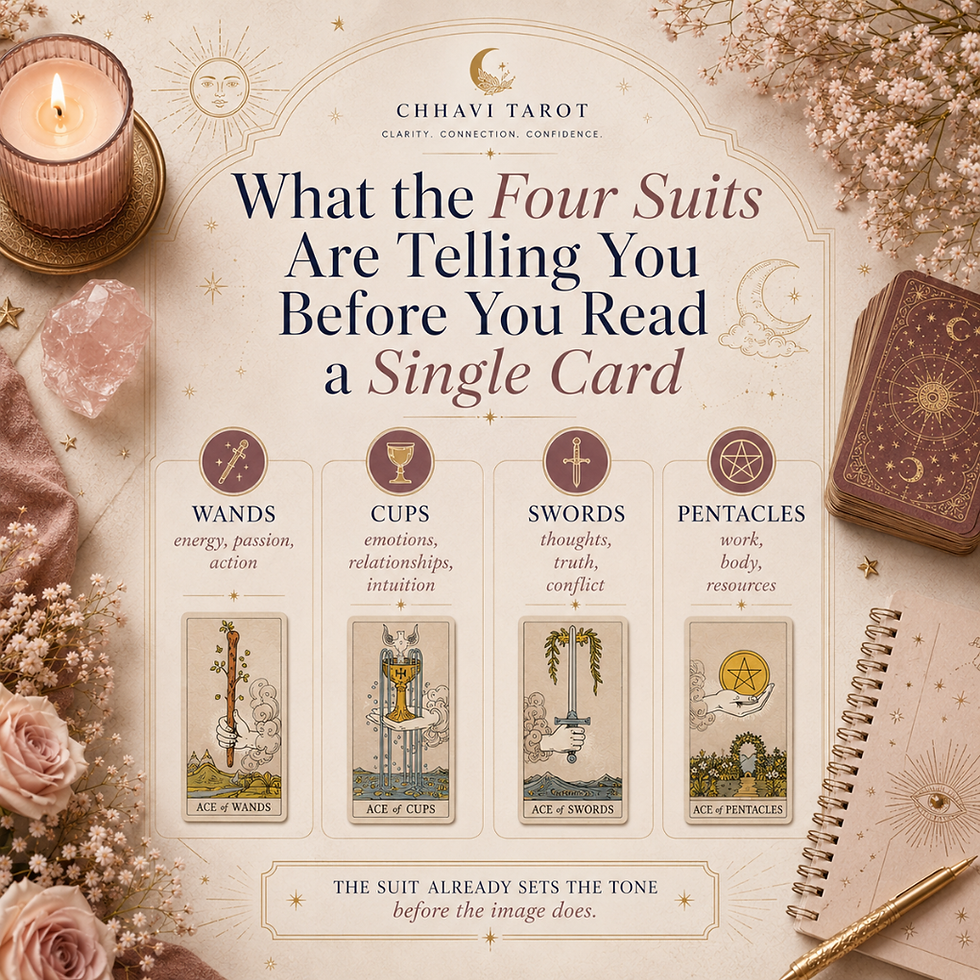
The suit tells you the area of life. The number tells you the stage of the energy.
Together, they give you a strong foundation before you study the image.
For example, a Five generally shows disturbance, conflict, instability, or challenge. But the suit tells you where that challenge is happening. The Five of Cups shows emotional disappointment. The Five of Wands shows active conflict or competition. The Five of Swords shows mental conflict, ego, or harsh words. The Five of Pentacles shows practical insecurity, lack, or feeling unsupported.
Same number. Different suit. Clearer interpretation.
Learn Tarot step by step through the complete Tarot Coaching Course: Tarot Course — The Complete Tarot Reader
Start your self-study journey with the Tarot Handbook: Learn to Read Tarot with Confidence and Accuracy
Aces: The Beginning of Energy
Aces represent beginnings, potential, and raw possibility.
They are seeds. Something has started, but it has not yet developed fully. An Ace does not guarantee success. It shows opportunity.
The Ace of Wands may show a new spark, passion, idea, or motivation. The Ace of Cups may show emotional opening, healing, or a new feeling. The Ace of Swords may show clarity, truth, or a mental breakthrough. The Ace of Pentacles may show a new job, financial opportunity, investment, or practical beginning.
The Ace says: something is beginning, but it needs attention to grow.
Twos: Choice, Balance, and Duality
Twos show two forces meeting.
This may appear as choice, partnership, balance, hesitation, or inner conflict. The energy is no longer just a seed. It is now interacting with something else.
The Two of Cups may show mutual connection or emotional exchange. The Two of Swords may show indecision or avoidance. The Two of Pentacles may show juggling responsibilities. The Two of Wands may show planning and looking toward the future.
The Two asks: what needs balance, choice, or alignment?
Threes: Growth and Expression
Threes show the first signs of growth.
Something is beginning to take shape. There may be communication, collaboration, expression, or early results.
The Three of Cups may show celebration, friendship, or social support. The Three of Pentacles may show teamwork and skill-building. The Three of Wands may show expansion and waiting for results. The Three of Swords, however, shows painful truth or emotional hurt because the suit of Swords brings the growth into the realm of the mind and difficult clarity.
The Three asks: what is developing, expressing, or becoming visible?
Fours: Stability, Pause, and Structure
Fours show foundation, pause, stability, or holding.
The energy may become secure, but it can also become stuck.
The Four of Wands may show celebration, harmony, or a stable milestone. The Four of Swords may show rest, silence, and recovery. The Four of Cups may show emotional withdrawal or dissatisfaction. The Four of Pentacles may show saving, control, or holding on too tightly.
The Four asks: is this stability healthy, or has it become stagnation?
Fives: Challenge and Disruption
Fives are the cards of disturbance.
They test the stability of the Four. Something becomes uncomfortable, unstable, or difficult. But Fives are not only negative. They force awareness.
The Five of Cups shows grief or regret. The Five of Wands shows disagreement or competition. The Five of Swords shows ego battles or conflict that comes at a cost. The Five of Pentacles shows lack, rejection, or insecurity.
The Five asks: what challenge needs to be faced honestly?
Sixes: Healing, Support, and Adjustment
Sixes bring movement after difficulty.
They often show healing, support, recovery, balance, or a better way forward.
The Six of Cups may show past connection, nostalgia, or emotional familiarity. The Six of Swords may show moving away from difficulty. The Six of Pentacles may show giving and receiving. The Six of Wands may show recognition and victory after effort.
The Six asks: what is being restored, healed, or supported?
Sevens: Complexity and Testing
Sevens show that things are not simple.
There may be hidden factors, strategy, doubt, reflection, temptation, or testing.
The Seven of Cups may show confusion, fantasy, or too many options. The Seven of Swords may show secrecy, strategy, or avoidance. The Seven of Pentacles may show waiting and assessing whether the effort is worth it. The Seven of Wands may show defending one’s position.
The Seven asks: what is unclear, hidden, or being tested?
Eights: Movement, Effort, and Mastery
Eights show movement and sustained energy.
This may be fast movement, disciplined effort, mental restriction, or emotional departure.
The Eight of Wands shows speed and communication. The Eight of Pentacles shows practice, skill, and dedication. The Eight of Cups shows walking away in search of deeper meaning. The Eight of Swords shows feeling trapped by fear or overthinking.
The Eight asks: where is the energy moving, repeating, or demanding effort?
Nines: Maturity and Inner State
Nines show a developed stage of experience.
The energy is close to completion. It may bring satisfaction, independence, anxiety, or guardedness, depending on the suit.
The Nine of Cups shows emotional satisfaction. The Nine of Pentacles shows self-worth and independence. The Nine of Swords shows anxiety and mental pressure. The Nine of Wands shows resilience, caution, and past wounds.
The Nine asks: what has this experience matured into?
Tens: Completion and Full Result
Tens show completion.
The cycle has reached its full expression. Sometimes this feels fulfilling. Sometimes it feels heavy.
The Ten of Cups shows emotional fulfilment and belonging. The Ten of Pentacles shows long-term stability and legacy. The Ten of Wands shows burden and exhaustion. The Ten of Swords shows painful completion or final release.
The Ten asks: what cycle is completing, and what comes next?
Number Plus Suit: The Beginner’s Shortcut to Accuracy
The most useful method is simple: combine the number with the suit.
The number gives the stage.
The suit gives the area.
A Four of Cups becomes an emotional pause or dissatisfaction.
A Four of Pentacles becomes practical holding or control.
A Four of Swords becomes mental rest and recovery.
A Four of Wands becomes a stable action or celebration.
This method helps you read with structure instead of panic. It reminds you that Tarot is not 78 random cards to memorise. It is a system.
Once you understand the numbers, every card becomes easier to approach.
Before the image speaks in detail, the number has already whispered the framework.
For personal Tarot guidance, deeper learning, and structured Tarot study, explore Chhavi Tarot.
Learn Tarot step by step through the complete Tarot Coaching Course: Tarot Course — The Complete Tarot Reader
Start your self-study journey with the Tarot Handbook: Learn to Read Tarot with Confidence and Accuracy
For regular insights and guidance, connect on Instagram: @chhavitarot


Comments